
Shiba Inu are celebrated for their beautiful thick coats which come in a variety of colours, each contributing to their striking appearance and charm. From the fiery red to the elusive sesame, the genetics behind these coats tell a fascinating story. Here’s a (very) brief overview of the science of coat color inheritance in Shiba Inu, with a particular look at Loki, Raven, and Ivy’s specific patterns.
*Note that I have made every effort to fact check, do quality research, and represent this information accurately, but I am not a geneticist and so this is an oversimplification of the science involved.
The Key Genes Behind Shiba Inu Coat Colors
Coat color in dogs is determined by multiple genes, with some of the most critical in Shiba Inu specifically being the Agouti locus (A), Extension locus (E), and for the purpose of this blog, the White Spotting locus (S). Each contributes in unique ways to how their colour presents.
| Agouti (A) Locus | ay = red at = black and tan aw = sesame |
| Expression (E) locus | E = agouti expresses e = agouti doesn’t express |
| Spotting (S) locus | S = no spotting sp = spotting |

Red Coat
Red is the most common Shiba Inu color and results from the dominance of the ay allele at the Agouti locus. The red coat can vary from a paler tan to a deep, fiery orange, depending on other modifying genes. Importantly, the urajiro (white markings on the chest, cheeks, and belly) is a key element of the breed standard and adds to the characteristic look of the red Shiba Inu.
- Genotype: ay/ay or ay/at or ay/aw at the Agouti locus, combined with the presence of a functional E allele at the Extension locus.

Sesame Coat
Sesame coats are less common. A sesame coat is defined by a red base coat interspersed with black-tipped hairs over the entire body (except where there is urajiro). True sesame results from the aw allele at the Agouti locus but a delicate balance of the ay and at alleles can produce a similar effect (see sashige below). Aw is dominant over the allele for black and tan (at) but recessive to red (ay) although these genes may not demonstrate complete dominance over each other.
- Genotype: aw/aw or aw/at at the Agouti locus, combined with the presence of a functional E allele at the Extension locus
Sashige “Dirty Red” or “Red Sesame” Coat
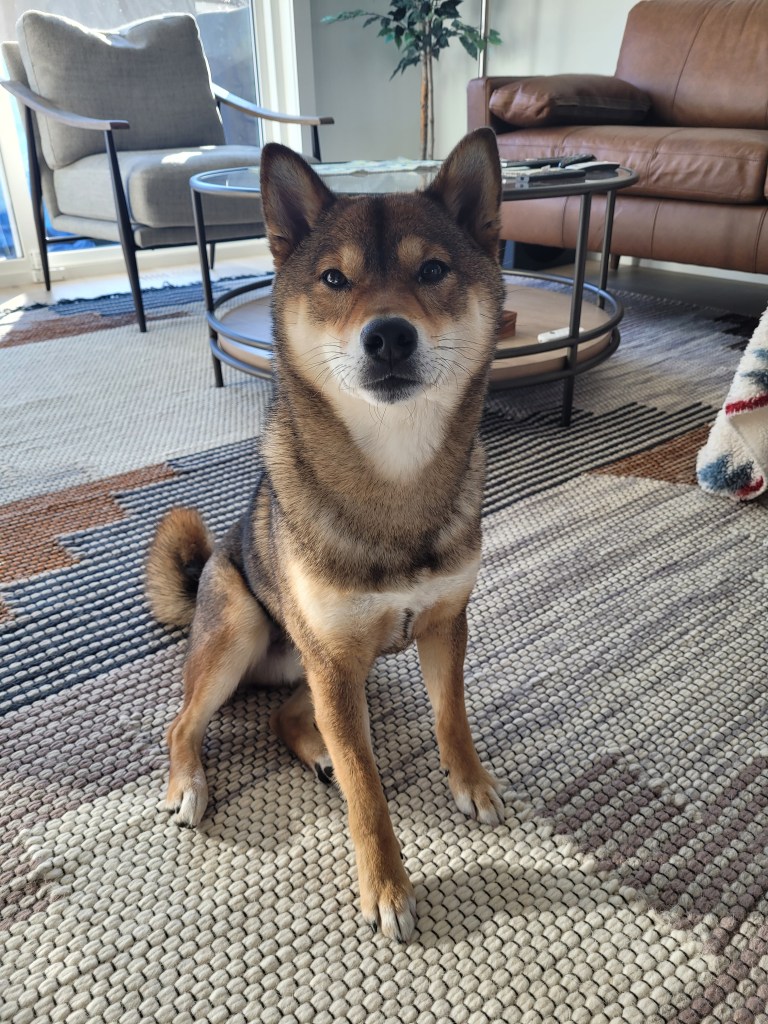
This is when a red base coat is interspersed with black-tipped hairs that don’t cover the whole body. This is the result of an ay/at allele pairing at the Agouti locus. The percentage of black-tipped hairs present may drastically vary and dogs of this genotype with lots of black tipping may sometimes be mistaken for true sesame.
- Genotype: ay/at at the Agouti locus, with modifiers determining the amount and areas of black-tipping, combined with the presence of a functional E allele at the Extension locus

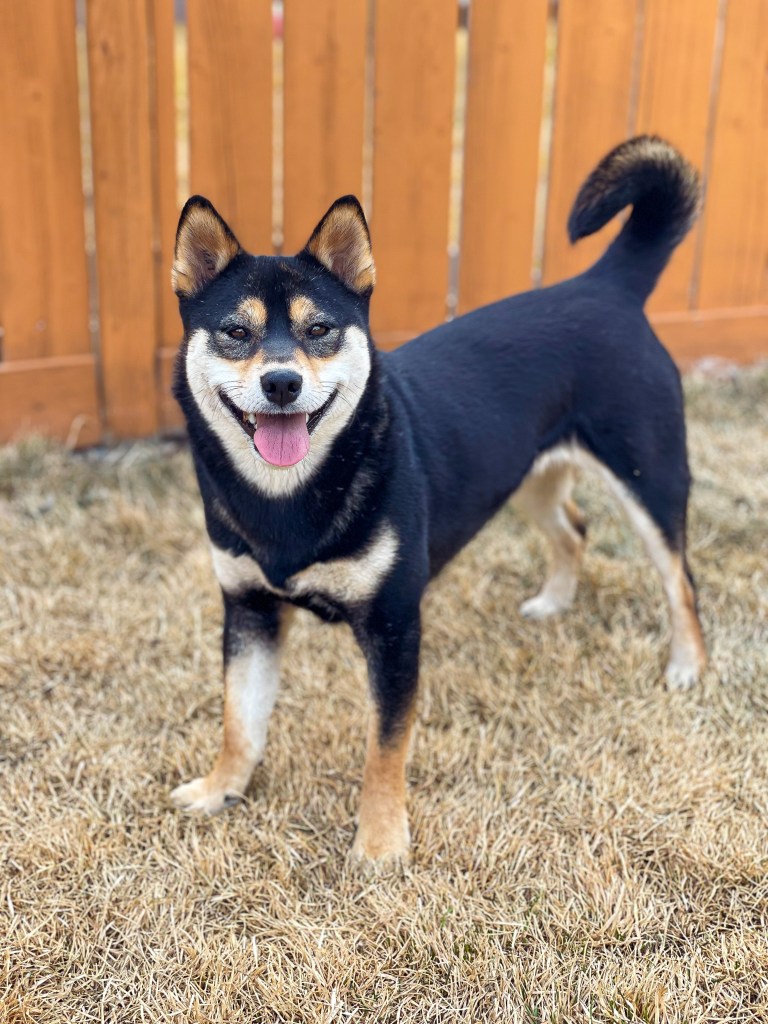
Black and Tan Coat
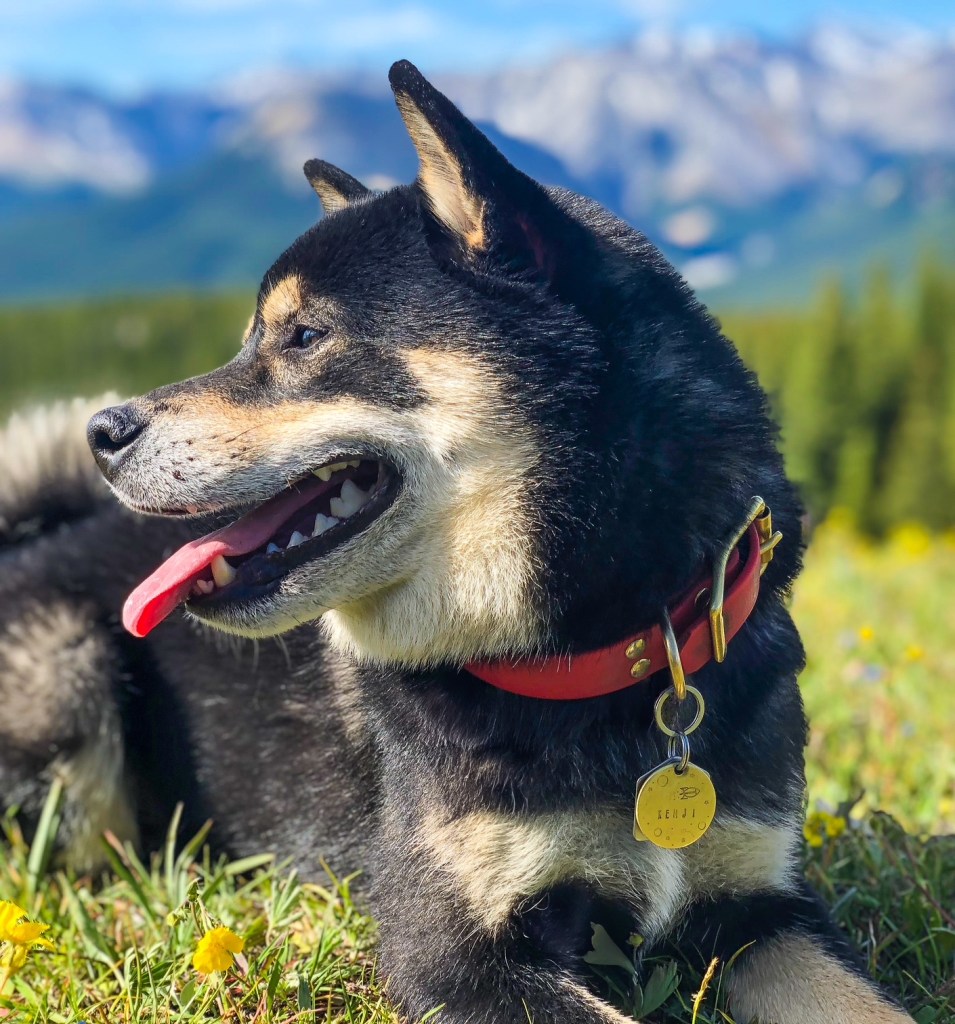
Black and tan Shibas are striking with their dark black coat and tan markings, often accompanied by urajiro. This coat pattern is controlled by the at allele at the Agouti locus, which is recessive to ay and aw.
- Genotype: at/at at the Agouti locus and at least one functional E allele at the Extension locus.
Cream Coat
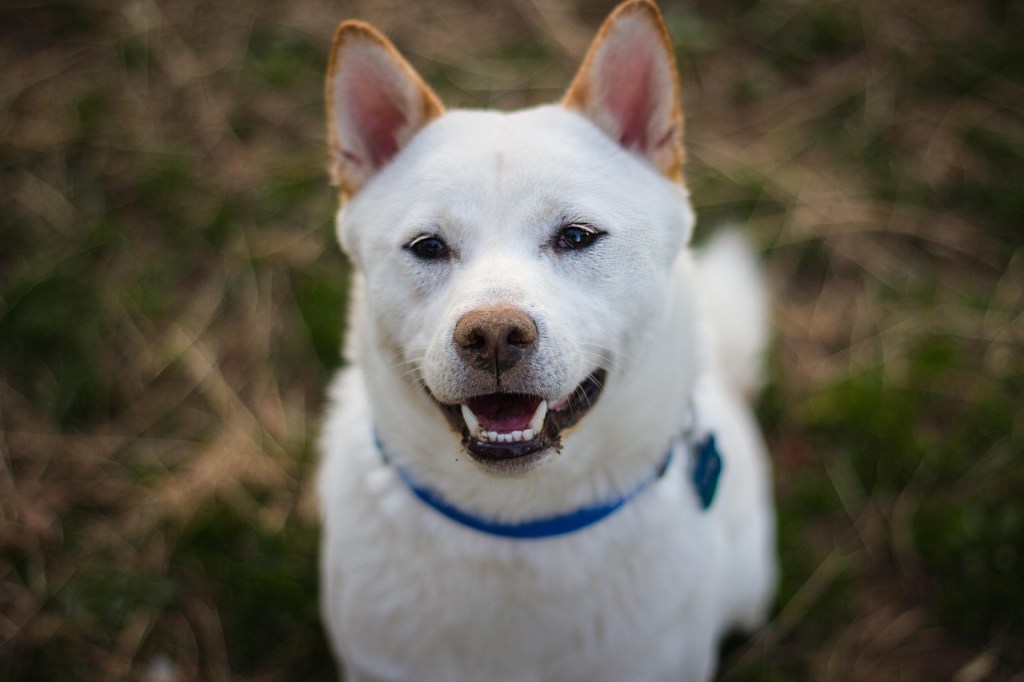
Cream Shibas lack the traditional urajiro pattern and have a light, almost white coat. This color is caused by the e/e genotype at the Extension locus, which masks the expression of Agouti alleles and prevents dark pigments from forming. e is recessive so dogs carrying one e allele will still express the Agouti gene although it is thought that carrying an e allele may sometimes affect or dilute the colour.
- Genotype: e/e at the Extension locus, overriding the effects of the Agouti alleles.
Pinto Coats: A Unique Case
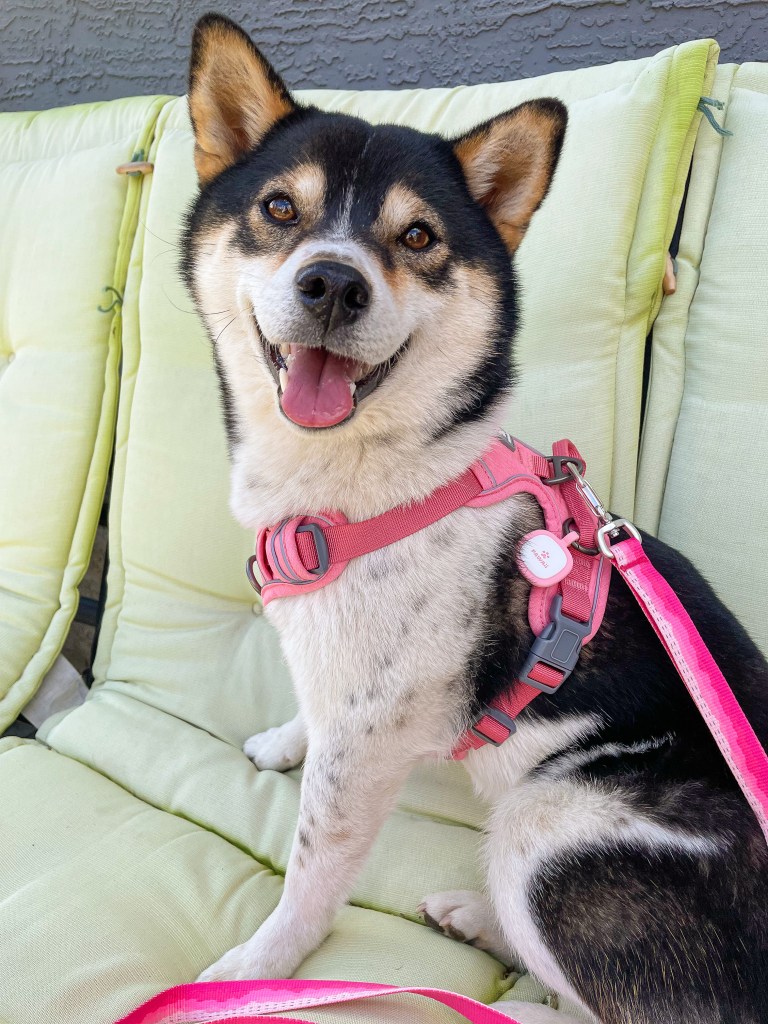
Pinto patterns occur when there are white spotting genes at the S locus. While Pinto is not a recognized breed standard in Shibas and is generally seen as undesirable in the breed, it creates a visually striking pattern of white patches against the base coat color. This pattern is determined by combinations of S (solid) and sp (piebald) alleles and likely other modifiers.
- Genotype: sp/sp at the S locus, with variable expression leading to diverse spotting patterns. It is thought that S/sp may create white markings but not necessarily a full pinto coat.
The Genotypes of Loki, Raven, and Ivy
Loki (Sashige)
Loki’s vibrant red coat, with subtle dark markings, is characteristic of sashige and highlights the dominance of the ay allele. His urajiro markings add to his classic Shiba Inu appearance.
- Genotype: ay/at at the Agouti locus, E/E at the Extension locus, and S/S at the White Spotting locus (no pinto markings).
An Embark DNA test performed in 2024 confirmed these genes.


Raven (Pinto)
Raven’s unique pinto coat is an anomaly in the Shiba Inu world. Shockingly, genetic testing revealed that she does not possess the spotting gene at the S locus. This means the exact cause of her coat’s unusual pattern remains a mystery, making her a true genetic enigma.
- Genotype: at/at Agouti locus, E/e at the Extension locus, and S/S at the White Spotting locus (no pinto spotting gene present).
An Embark DNA test performed in 2024 confirmed these genes.
Ivy (Black and Tan)
Ivy’s beautiful black and tan coloring showcases the at/at genotype. Her dark black coat is accentuated by warm tan points and the characteristic urajiro markings of the breed.
- Genotype: at/at at the Agouti locus, E/e at the Extension locus, and S/S at the White Spotting locus (no pinto markings).
An Embark DNA test performed in 2023 confirmed these genes.
How to Genotype Your Own Shiba Inu
With a basic understanding of how dominant and recessive genes work, it’s fairly easy to work out the genotype of your Shiba Inu if you know what colours their parents are and sometimes even by appearance alone.
Remember that:
The genes for cream (e) and black and tan (at) are recessive. So a cream Shiba Inu will always be e/e at the E locus and a black and tan Shiba Inu will always be at/at at the A locus. That also means that they will always pass a copy of that gene on to any offspring.
It will be difficult to tell what genes a cream Shiba carries at the A locus (since it is not expressed) unless you can make an educated guess based on what colour their parents or offspring are.
Any Shiba Inu that is not cream will always have at least one E allele at the E locus. Unless they have a cream parent or have produced cream offspring, the only other way to tell what the other allele is is through DNA testing.
Because the allele for red (ay) is dominant, it can be a little harder to guess what the other allele might be. But if your Shiba Inu has any black tipped fur in their coat, that could be an indicator that they carry the at (black and tan) allele.
True sesames will carry an aw allele.
White markings or a pinto coat can indicate that they carry the sp (spotting) allele.
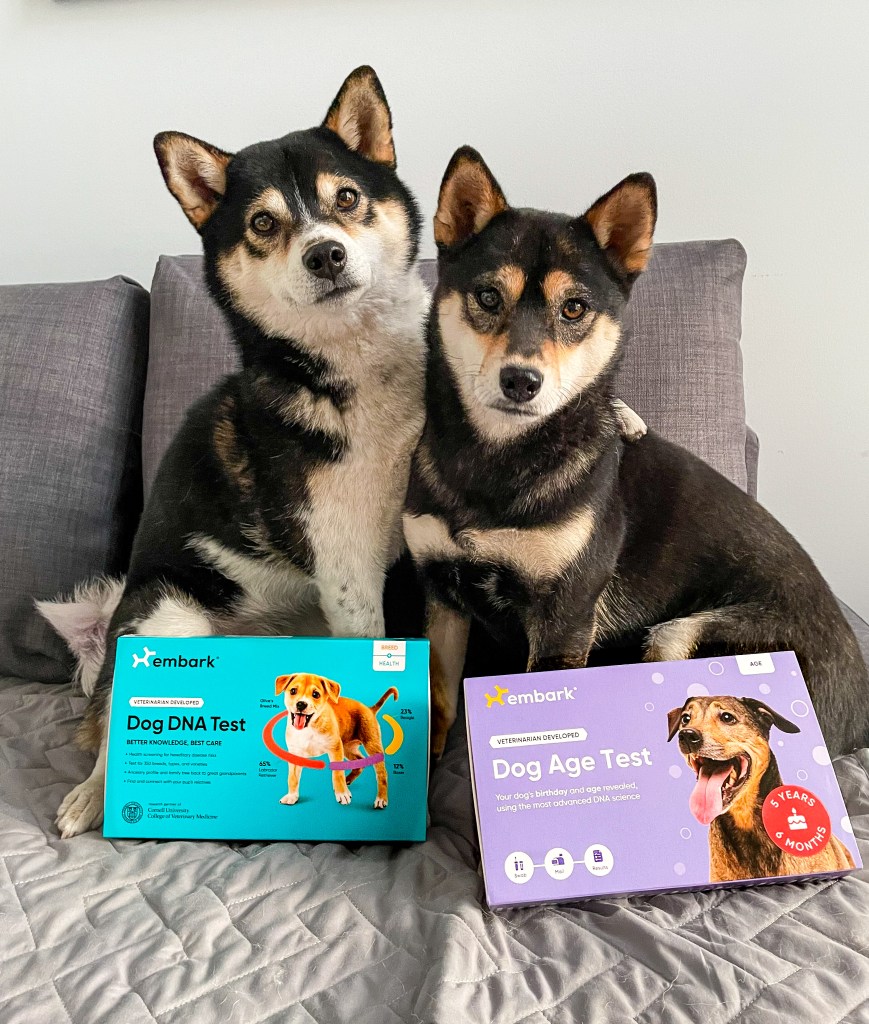
We recommend Embark if you’re interested in DNA testing your dog (and for much more than just to understand their colour genetics!) You can shop their tests here. Note that we do earn a small commission on sales.
Final Thoughts
Understanding the genetics behind Shiba Inu coat colors adds a new layer of appreciation for these already captivating dogs. Each coat tells a unique genetic story, from Loki’s classic red sashige to Ivy’s elegant black and tan pattern and Raven’s puzzling pinto coat. Whether you’re an owner or enthusiast, the intricate world of Shiba Inu coat genetics is as fascinating as the dogs themselves.
 The Trickster Shibes
Leave a comment